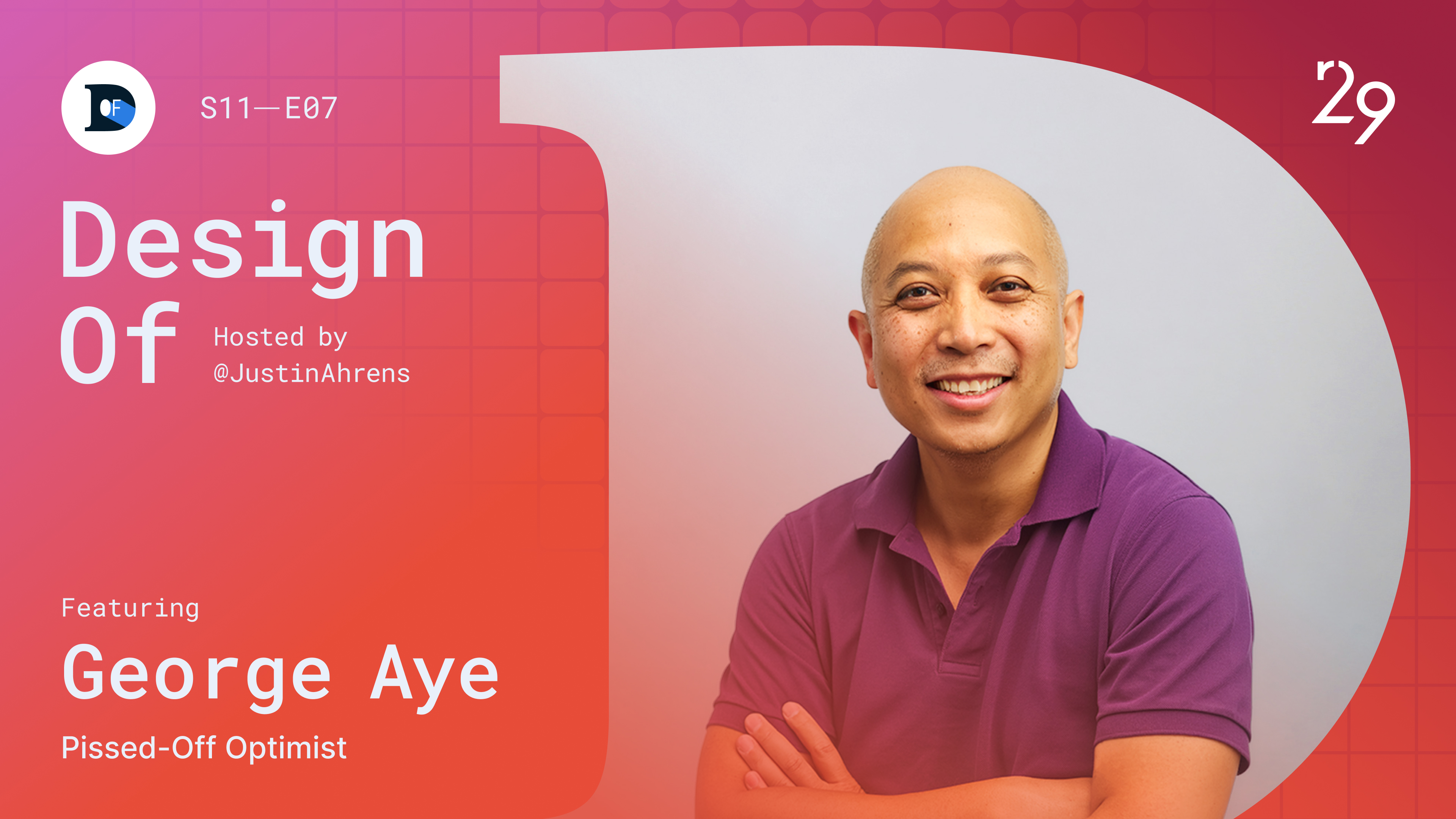
The Design Of Pissed-Off Optimism: Meet George Aye
Season 11, Episode 80

Posted By Justin Ahrens in Podcast
Read Time
1 minute
What if good design isn't just about what we create, but what we're willing to stand for?
George Aye has spent much of his life figuring out what he stands for.
Born in Myanmar and raised in England, George grew up with a family story shaped by courage, injustice, and sacrifice. Before George was born, his father spent years in a Burmese prison after being identified as an agitator against the country's oppressive military regime.
Eventually, his family left Myanmar for England. George was only three. But his father's story stayed with him. Not necessarily as something George fully understood as a kid, but as what he now describes as a clear moral compass.
That compass would eventually shape nearly everything that followed.
George struggled in school and nearly didn't make it to college. He found his way into an engineering program, discovered an unexpected love for 3D modeling, and began calling design firms from the Yellow Pages looking for someone willing to give him a chance.
One of those chances eventually led him from England to Chicago and IDEO.
For seven years, George worked alongside some of the designers he admired most. It was formative. It also left him asking difficult questions about purpose, business, and what design is ultimately for.
Those questions changed the direction of his life. After leaving IDEO and spending a year at the Chicago Transit Authority, George and his wife, Sara Cantor, began imagining something different.
A design studio with the methods and creativity George loved, but with a clear social purpose.
In 2011, they founded Greater Good Studio. And Sara made one thing clear from the beginning. They would not do commercial work. They would work exclusively with organizations serving the social sector. Fifteen years later, that decision still defines their work.
Today, George and Sara continue to challenge some of the assumptions the design industry has long accepted. They have built Greater Good Studio around the belief that designers need to think beyond the person paying the bill and consider the people who will actually live with the consequences of what gets designed.
That means asking harder questions. Knowing when to say no. Walking away when something isn't right.
And recognizing that sometimes the best way to make room for meaningful work is to stop doing work that doesn't belong.
In this episode of Design Of, George shares his unlikely path into design, the influence of his father, meeting and building a life with Sara, his years at IDEO, the creation of Greater Good Studio, and why learning to say no has become such an important part of how he works.
We also talk about a phrase that has come to define George, Sara, and the community forming around their work:
Pissed-Off Optimists.
People who can clearly see what's broken in the world and be angry about it, while refusing to surrender their hope that things can be better.
That idea has grown beyond the studio into Angry Hour gatherings across the country and the Livid Conference, creating places for people who share that tension between frustration and hope to find one another.
And now it is leading George toward one of the biggest questions of his career.
His newest keynote, Designing a New Social Contract, asks us to consider something remarkably simple:
"What do we expect of each other when we're in need?"
For George, that question opens a much larger conversation about power, aging, dignity, responsibility, and the systems we've inherited.
And whether we're willing to imagine something better. This conversation isn't really about design.
It's about knowing what you believe. And having the courage to build your life around it.

In This Episode, We Explore
How George's childhood in Myanmar and England shaped the way he sees identity, power, and belonging
The moral clarity he inherited from his father
Nearly missing college and the unexpected skill that opened the door to design
How persistence and hundreds of cold calls helped launch his career
Moving to Chicago and spending seven formative years at IDEO
Meeting Sara Cantor and why working together became such an important part of their relationship
Why George and Sara created Greater Good Studio exclusively for the social sector
How saying no can create more room for the work that matters
What it means to design for the people affected by the work, not simply the people paying for it
The thinking behind Pissed-Off Optimism, Angry Hour, and the Livid Conference
George's newest keynote, Designing a New Social Contract
Why aging and dignity may offer a way to rethink the systems we all depend on
Key Takeaways
A career does not have to begin with a perfectly designed plan.
Persistence can matter as much as talent.
The people who shape our moral compass can influence our work long after childhood.
Saying no isn't simply turning away business. It can preserve energy for the work and relationships that are a better fit.
Good design requires thinking about who ultimately lives with the consequences of what gets created.
Optimism doesn't require ignoring what's broken. Hope and anger can exist together.
The systems we inherit aren't necessarily the systems we have to accept.
Design can be a way of asking a much larger question: What kind of world do we want to help create?
About George
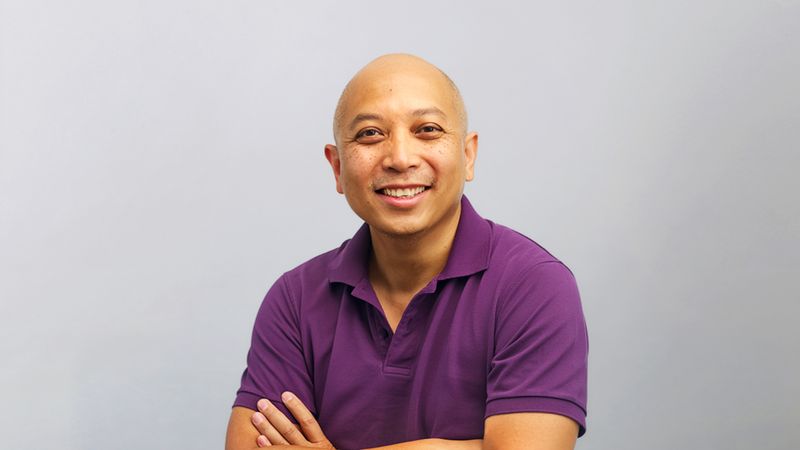
George Aye is the Co-Founder and Co-Executive Director of Greater Good Studio, a Chicago-based design firm he founded with Sara Cantor in 2011 to work exclusively with organizations in the social sector.
Before Greater Good Studio, George spent seven years at IDEO and later worked at the Chicago Transit Authority. Today, his work explores design, ethics, power, social impact, and the responsibility designers have to the people their work ultimately affects.
Along with Sara, George is also behind Angry Hour, a gathering for "Pissed-Off Optimists," and the Livid Conference. He is currently presenting his newest keynote, Designing a New Social Contract, exploring what we should be able to expect from one another when we're in need and how we might build systems that better support dignity throughout our lives.
Listen now.